

Modelling suggests both carbon taxes and green subsidies will be necessary to decarbonise the US economy, but the inconsistent policies of successive presidents are the «worst case» scenario
Reaching net-zero greenhouse gas emissions by 2050 in the US will require not only the “carrots” of green subsidies, but also eventually the “sticks” of carbon taxes – which both appear unlikely under President Donald Trump.
The most effective way to reduce carbon emissions is by putting some kind of price or tax on them. But the US government has repeatedly failed to pass cap-and-trade legislation, which would cap emissions and require companies over the cap to buy allowances.
Subsidies are easier to adopt and can bring down the cost of low-emission technologies like electric vehicles, making a price on carbon less painful.
Wei Peng at Princeton University and her colleagues modelled the impact of subsidies, taxes and various timings of both to determine the best sequence of policies for reducing carbon emissions in the US.
While subsidies could reduce energy system emissions by 32 per cent before 2030, their effect diminishes after that, since fossil fuels like natural gas remain cost-competitive, the researchers found.
On the other hand, a “carrots with quick stick” scenario, in which a carbon price is imposed in 2035, would phase out most fossil fuels, reducing energy system emissions by more than 80 per cent by 2050.
“Carrots can help grow green industry, but we still need sticks to really reach decarbonisation goals,” says Peng. “So the question is how to make that transition.”
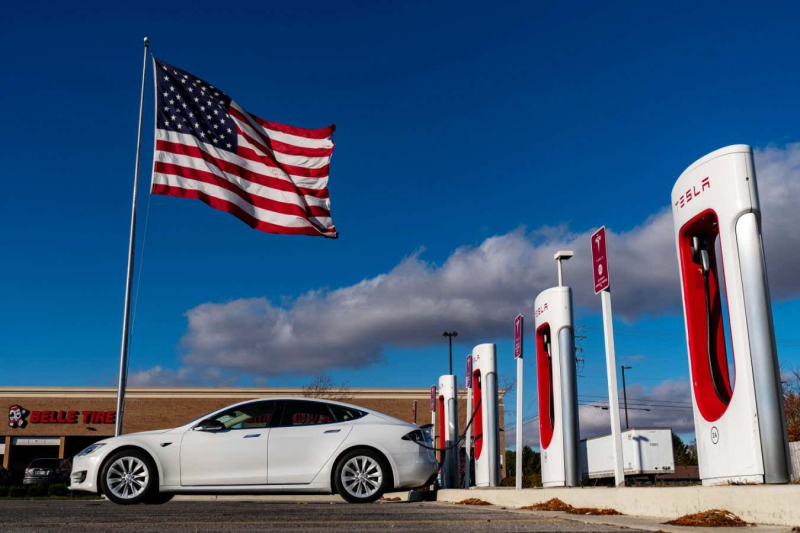
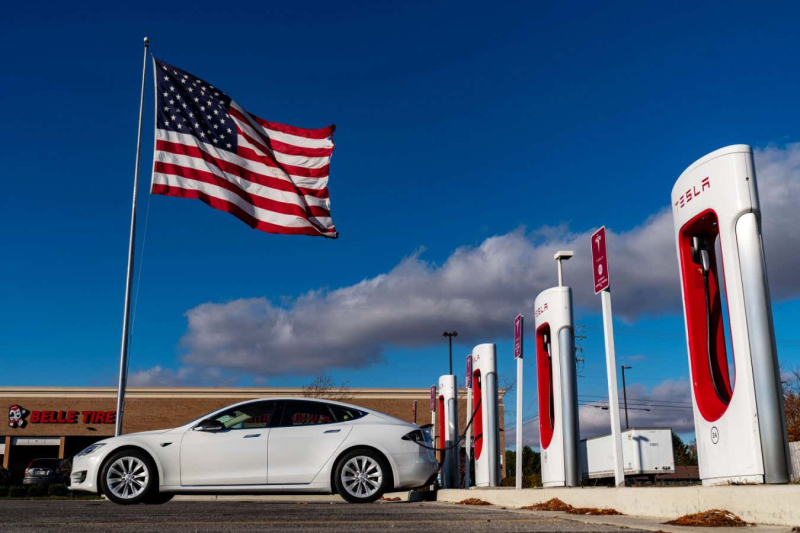
Under President Joe Biden’s 2050 net-zero goal, the US passed laws to invest in green infrastructure like electric vehicle charging and battery storage and offer tax rebates for clean technology like hydrogen production and carbon sequestration. Trump, however, has labelled these subsidies a “green new scam” and cancelled many of them.
This kind of inconsistent policy “is the worst case on all the fronts”, says Peng. “You’re making decarbonisation either more slow or more expensive.”
If subsidies are reinstated after Trump’s term ends in 2029 and a carbon price is instituted in 2045, that price will need to be 67 per cent higher to reach net zero than if a carbon price were adopted now, Peng and her colleagues found. That is largely because the US would need to remove massive amounts of carbon dioxide from the atmosphere with expensive technologies.
However, the researchers note that “accelerated innovation” in the form of unexpected technological breakthroughs could lessen the need for sticks.
While the research is a convincing “call for carbon pricing”, expanding it to other countries would give a more comprehensive picture of how different carrot-and-stick combinations work, says Gregory Nemet at the University of Wisconsin-Madison. China and the European Union have both extensive subsidies and carbon pricing, and the fruits of these efforts – especially cheap solar panels – are now allowing other nations to cut emissions.
“Progress continues in those places; policy continues,” says Nemet. “It’s generating some accelerated innovation… that the US could have access to.”